Conferences
AKSC 3rd Annual Conference 2022
3rd annual
The third annual conference took Hindutva and Brahminism as its theme, with speakers on debrahminization, caste and workplace hostility, and the manufacture of anti-Muslim hysteria.
- Date
- August 27, 2022
- Format
- In person
- Venue
- Cupertino, California
- Theme
- Hindutva and Brahminism
- Programme
- Full details and speakers
August 27th, Saturday, Cupertino, CA
Our destiny is largely in our own hands … If we succeed in the race of life, it must be by our own energies, and our own exertions. Others may clear the road, but we must go forward, or be left behind in the race of life.
– Frederick Douglass
The Ambedkar King Study Circle (AKSC) has been organising to challenge caste and Brahmanism in the USA since October 2016. We have worked through a variety of campaigns, events, and solidarity actions and have learnt through this process that:
-
South Asians in general, and the Hindus in particular continue to be caste-conscious and practice caste in the USA. This has been demonstrated by
and independent surveys have confirmed the same. The
at software company Cisco and the
BAPS temple caste exploitation
are some of the more recent manifestations of the practice of caste in the USA.
-
The practice of caste cannot take place without institutional support and such support comes from the Hindutva organizations operating in the USA. Both in the Cisco case, and the BAPS Temple case, Hindutva defended the exploiters. Tellingly, the main argument used by Hindutva groups has been that the state’s intervention into the issue of caste discrimination is an intervention into the religious beliefs of the Hindus. Hindutva organizations in the United States have a long record of upholding caste and protecting the interests of the dominant castes in the name of religious freedom.
-
Non South Asians are not aware about caste and the ways it’s practised, which is an additional advantage for Brahmanical organizations . This allows these Brahmanical organizations that might practise caste to nevertheless take public positions against racist discrimination.
-
In an alarming development, Hindutva ideology is making inroads into the American political establishment, including through electoral gains and employment of its followers at various levels of the US administration.
AKSC is organizing its 3rd conference in order to
-
Mobilize, in large numbers, people committed to challenging caste in order to counter the attempts by Hindutva organizations to institutionalize Brahminism in the name of religious freedom.
-
Expose those individuals and organizations that are misleading anti-racist organizations with claims of solidarity while continuing to practice Brahminism.
-
Alert the American polity about the penetration of the Hindu supremacists in the politics and the administration.
When: Saturday, 27th August 2022
Time: 10.00 AM – 6.00 PM PDT
Where: 20589 Homestead Road, Cupertino, CA 95014
RSVP today at Register of AKSC Conference
Hindutva and Brahminism
Hindutva is the name given to an ideology and a social movement that have been variously called ethno-nationalism, ethno-religious nationalism, Hindu supremacist nationalism, low intensity terror, fascism, and ethnoreligious ultra-nationalism. Crafted in the early part of the 20th century, this ideology is very specific and clear about its axioms and objective. It treats as axiomatic the claim that Hindus and Muslims are two separate nations permanently at war. Its main objective is also as clear – to make India into a Hindu nation where any Muslim (and by extension, Christians and Jews) will be a second class citizen in India.
The strategy of Hindutva to realize this objective is to transform India from a very diverse society and a pluralist nation built upon a robust secular and democratic Constitution, into a nation of one culture (i.e., one people with a singular identity), one religion, one (dominant) language, and preferably one political party. Over the last century, Hindutva has been organizationally built with a command structure deploying a very large and disciplined membership cadre (secretive rolls) that is militarily armed, savvily managed and image conscious, and operating with populist strategies of resentment, post-truth claims, charismatic leadership and mobilized lumpen armies of vigilantes who act with full impunity in the current political regime. Hindutva is in full control of the Indian state since 2014 with all top institutional heads including the Prime Minister being longtime Hindutva cadres and ideologues. Further, Hindutva has a support base within Indian middle classes that cuts across castes, and is propped up by massive financial support from Indian capitalist classes who benefit from its neoliberal policies and largesse.
At the core of Hindutva lie nativist claims of being the authentic representatives of ‘Indian culture and tradition’, viewed in the singular and as inherently ‘pure and perfect’, rather than as diverse, continually changing and in need of reforms. Consequently, and despite its attempts to mask itself, Hindutva is built on a complex of patriarchal, brahmanical, masculinist and militaristic models of family, society, leadership and nation. All of these ideologies and practices are key to the organizational principle and practice of caste which plays a critical role for Hindutva.
While Hindutva has clearly identified Muslims (and other Abrahamic religious populations) as the ‘enemy’ and cast them as ‘outsiders’ to India (despite each of their antiquity and long roots in the South Asian region), it has three other populations who it seeks to discipline and domesticate. These are Dalits, Adivasis and the broad Left (including workers, intellectuals, artists). Each of these groups is a potential thorn for Hindutva’s claim that Hindus exist as India’s oldest and largest community. Dalits expose the fact that Hindus were never ’one community’ due to internal fissures of caste; Adivasis (first nation peoples) expose the fact that Hindus are not an autochthonous population and were in fact preceded by an earlier indigenous population of adivasis who therefore have their own religions; and the existence of a broad Left that is secular and built upon egalitarian principles expose the fact that Hindutva ideology is not accepted by large sections of Indian citizens.
Brahminism is the primary ideology that allows Hindutva to operate against Dalits since it legitimizes caste within the house of Hinduism. Brahminism is an ideology of brahmin supremacy (narrow view) and ‘twice-born’ caste supremacy (broad view which asserts the supremacy of the first three varnas – brahmins, ksatriyas and vaisyas or the ancient classes of clergy, nobility or warriors, and trader/merchants). The supremacy (backed up by masculinist, patriarchal and militarist actions of Hindutva foot soldiers) is used to make Dalits accept their stigmatized and low rank within a caste structure since Brahminism naturalizes hierarchically ranked caste orders (varnas). It does this through a combination of bio-genealogical claims (claims of ‘purity of blood’ and ancestry as being naturally ranked hierarchies due to the series of birth and death cycles of karmic action within Hindu soteriology), or behavioral traits (purported stereotyped traits of each varna), or natural abilities/qualities (purported stereotyped natural qualities supposedly inherent in each varna).
Brahminism also works to hold Hindutva’s non-Dalit followership in thrall to the ancient symbolisms and rituals of traditional kingship and priesthood coming together to control the entire life cycle events of ordinary people from birth to death within Hinduism’s Sanskritic cultural tradition. For the king (or modern leader) is to be viewed as god on earth, a status that is traditionally consecrated through the aegis of the brahmin (or priest) with caste being viewed as a ‘natural’ and sacred social structure.
Thus, Brahminism operates to keep caste intact while claiming the existence of one unified Hindu community for Hindutva. It ensures the maintenance of caste boundaries and prevents caste mixing (which is anathema to orthodox Hindus).
Any opposition to Hindutva therefore needs to be anti-Brahmanical.
Schedule
| Time | Program |
|---|---|
| 9:30 AM to 10:00 AM | Registration and Seating |
| 10:00 AM to 10:15 AM | Welcome & Introduction |
| 10:15 AM to 11:00 AM | Dr. Gajendran Ayyathurai, Anthropologist and Historian. Brahminical sciolism and caste oppression: Towards debrahminization of civil society, state, and academy. |
| 11:00 AM to 11:10 AM | SESSION BREAK |
| 11:10 AM to 11:55 AM | Ms. Crystal Calhoun, The Elder LeaderFounder, San José Unified Equity Coalition. How to thrive as a Beautiful Black Woman for 65yrs in America. |
| 11:55 AM to 12:30 PM | LUNCH |
| 12:30 PM to 1:15 PM | Dr. Balmurli Natrajan, Anthropologist. Caste and Workplace Hostility. |
| 1:15 PM to 1:25 PM | SESSION BREAK |
| 1:25 PM to 1:50 PM | Dr. Samina Salim, US academic, social and religious freedom activist. Hindutva – Manufacturing Hate & Anti-Muslim Hysteria. |
| 1:50 PM to 2:10 PM | SESSION BREAK |
| 2:10 PM to 2:55 PM | Ms. Grace Deehl, Member of the Alphabet Workers Union. DEI at work – how unions empower us all. |
| 2:55 PM to 3:40 PM | Ms. Peggy Elwell, Steering Committee Member, South Bay Progressive Alliance. Race, Class, and the Fight for True Democracy |
| 3:40 PM to 4:00 PM | TEA BREAK |
| 4:00 PM to 4:30 PM | Resolutions & Conclusion |
| 4:30 Pm to 6:00 PM | Dinner |
Speakers
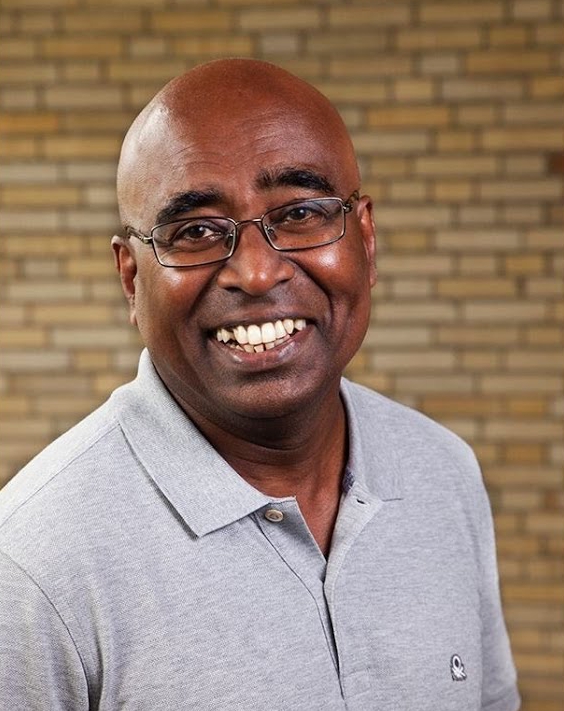
Dr Gajendran Ayyathurai
Dr. Gajendran Ayyathurai earned his PhD at Columbia an anthropologist and a historian based in Göttingen, Germany. Before going to Göttingen University, Dr. Gajendran taught at Columbia University, City University of New York, and William Paterson University, USA. He has published on the culture, memory, and history of the casteless Tamils/Indians in Tamil, English, and German. And he has initiated a new subfield, Critical Caste Studies, with scholars from India, Europe, and North America.
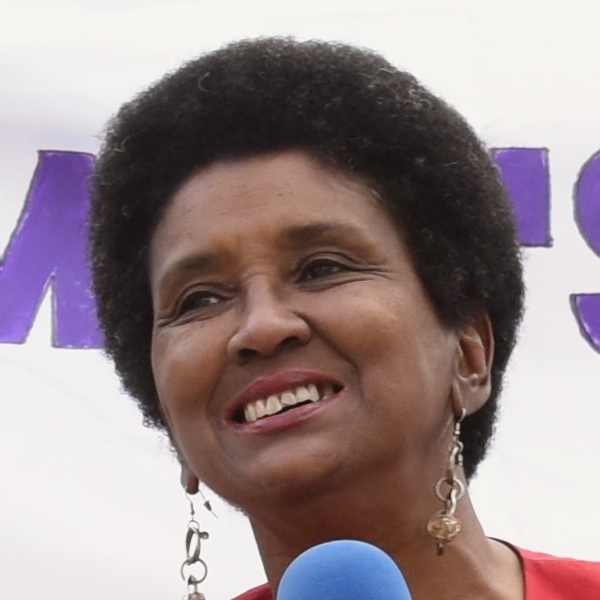
Ms. Crystal Calhoun
Crystal Calhoun was born in Texas in 1956 and grew into her family’s activism as they resisted the racism directed at their community. She marched with her grandparents demanding racial justice and equality.
Ms. Calhoun went to an all-black school till grade 5, and as a young student in a segregated school, she found that “separate but equal” translated in practice to using 10-year-old school textbooks! After the state of Texas was forced in 1965 to integrate its schools, Ms. Calhoun attended an integrated school only to find herself subjected to abuse at the hands of the white principal of the school. Later, as a parent raising her three sons in California, Ms. Calhoun worked with school teachers, principals, and counselors to ensure that the black students of the school had an opportunity to get an equal and fair education.
In 2020, the murder of George Floyd led Ms. Calhoun to get involved with the San Jose Unified Equity coalition which works to ensure that students of color in the San Jose Unified school district have access to a good education.
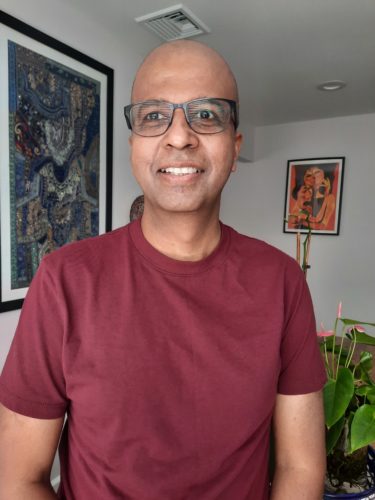
Dr. Balmurli Natrajan
Dr. Balmurli Natrajan is an anthropologist working at the intersections of the material and the symbolic, of the biocultural and political economy, and of culture, cognition, and practice. His key research and teaching foci fall into three domains: group formation & inequalities (caste, race); culture, identity, practices (community, variation, transmission); and development (sanitation, domestic work, indebtedness, livelihoods).
Dr. Natrajan is a Professor of Anthropology in the Department of Community and Social Justice at William Paterson University of New Jersey, USA. His publications are here, https://balmurlinatrajan.com/publications/
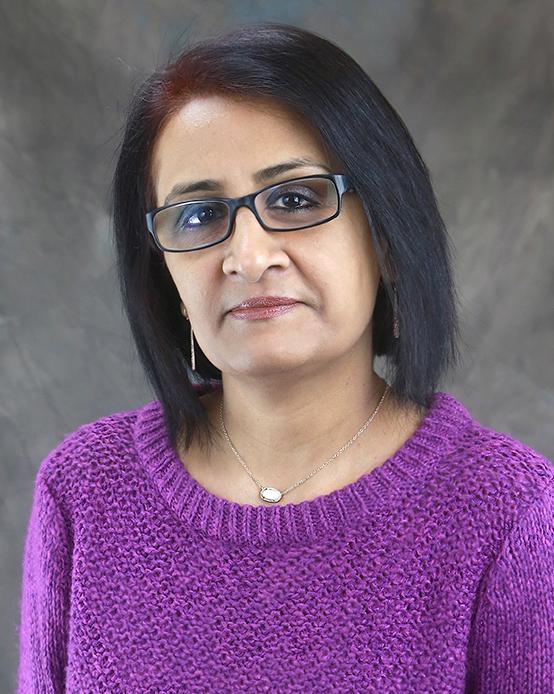
Dr. Samina Salim
Dr. Samina Salim is an American academic scientist. She obtained a Ph.D degree from India and conducted postdoctoral studies at the Karolinska Institute, Stockholm, Sweden, and the University of Texas Health Science Center in Houston. She is the author of more than 80 peer-reviewed publications, with an accomplished record of scholarship and professional service. She currently serves as a Fulbright Specialist, plays an active role in student mentoring activities, and has mentored a number of graduate and undergraduate students, who have all moved on to have successful careers.
In addition to her scientific pursuits, Dr. Samina has authored more than 30 Op-Eds. She serves on the advisory board of many non-profit organizations. She is the founding President of AligsCare, a Texas-based 501(C)(3) non-profit organization that delivers cancer support to underserved communities in India. More details about Dr. Samina: https://uh.edu/pharmacy/directory-home/pps-faculty/samina-salim/

Ms. Grace Deehl
Ms. Grace Deehl (she/they) is a SanFrancisco-based Technical Solutions Consultant at Google and a member of the Alphabet Workers Union (AWU). After earning a Bachelor of Science in Computer Science from Florida Int’l University, they have spent the better part of a decade working in various capacities across software engineering, information technology, and product management. They’re currently focused on advocacy education in the areas of workplace organizing and DEI initiatives within the ad-tech ecosystem.
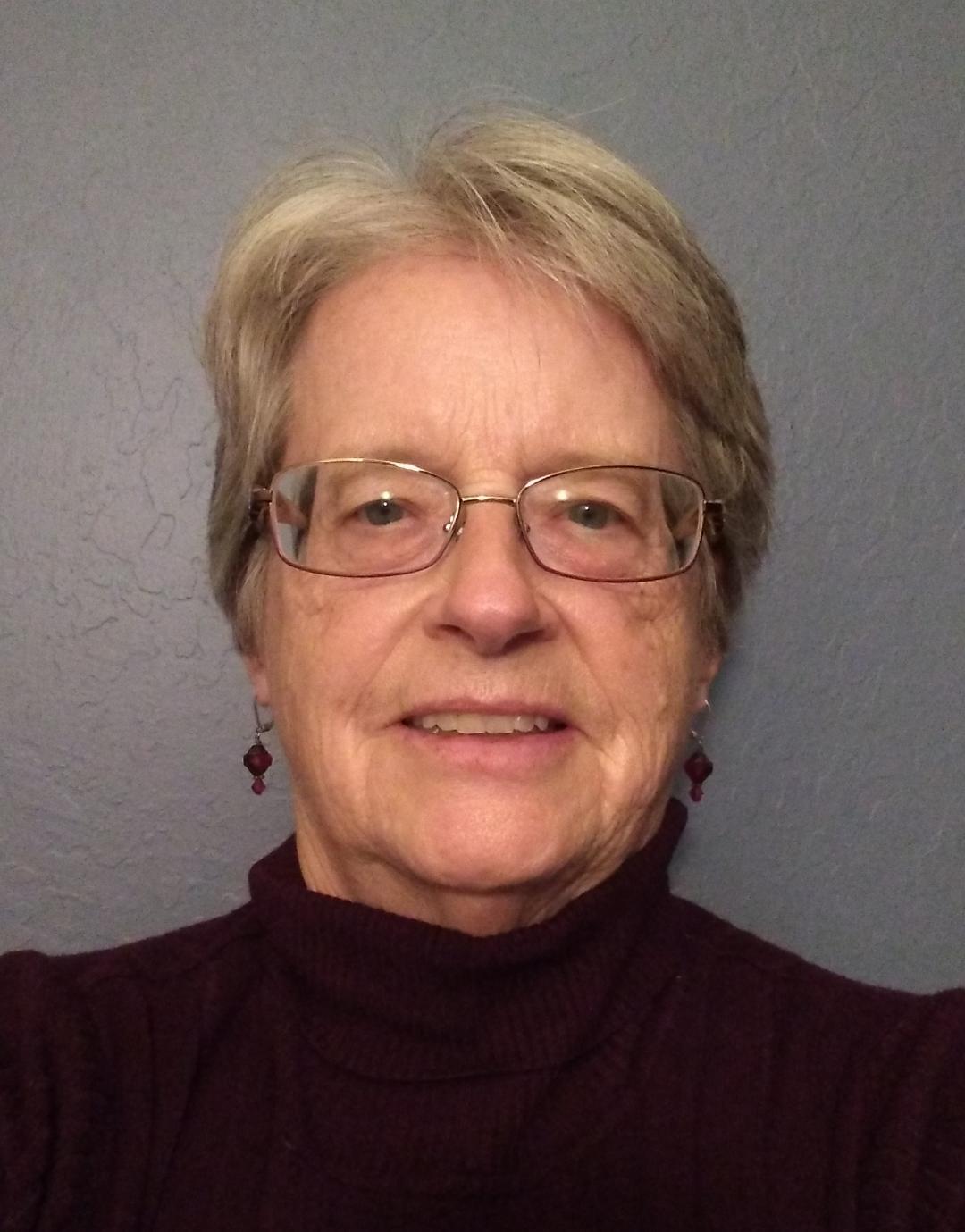
Ms. Peggy Elwell
Peggy Elwell is a mother and grandmother, as well as a semi-retired librarian, having worked for 22 years at the Biblioteca Latinoamericana Library in San Jose. She is on the Steering Committee of the South Bay Progressive Alliance and has been involved in the fight for single-payer universal health care for 20 years. She was co-founder of the Low-Income Self-Help Center in San Jose. She is a member of the League of Revolutionaries for a New America.
Resolutions
Resolution I:
The conference urges US companies to address caste-based discrimination at the level of policy and best practices and to be vigilant in relation to caste discrimination among their employees.
When the Cisco caste discrimination case was reported on June 30, 2020, Ambedkar King Study Circle immediately responded that caste is widely practiced by many Indians in the United States. It is to be expected that such practices and attitudes also extend to workplaces. On July 13, 2020, 15 civil rights organizations from the US and close to 1000 individuals signed and sent a statement that urged major companies in the US to address the phenomenon of caste discrimination at the policy level.
Companies should be mindful of the fact that caste practices often manifest around the celebration of rituals, festivals, social events, and food sharing among employees. Companies must ensure that all types of food are made available, including a variety of meats (halal or non-halal) as well as non-meat and vegetarian options. Companies should also refrain from celebrating festivals that are specific to only some caste communities and traditions. Instead, management should consult with a cross-section of employees in order to promote celebrations and social events that are inclusive and open to people of all backgrounds, beliefs, and preferences. Policy-level protections and procedures for best practices are the only means to protect employees from caste discrimination.
Resolution II:
The conference appreciates Apple Inc for prohibiting caste-based discrimination.
On 16th Aug 2022, the media widely reported that Apple had updated its general employment conduct policy in September 2020 to include the prohibition of caste-based discrimination. This conference acknowledges the policy update as ground-breaking. We appreciate Apple being the first US employer to include caste-based discrimination in a major policy document. However, it is surprising that most Apple employees were not made aware of this policy update and equally surprising that there was no press release from Apple at the time of the policy update in 2020. If the news had been made available by an Apple press release or media report at the time, it would have enabled the entire industry to follow in Apple’s footsteps.
Topics
- Hindutva
- Caste discrimination
- Workplace
- Solidarity